Petrol Relief for Consumers in Pakistan: How It Helps and Why Prices Are Not Simply Reduced?
Pakistan’s fuel prices have become a major concern for households, commuters, businesses and transport workers. With petrol prices remaining high, the government has introduced targeted petrol relief for consumers in pakistan instead of reducing the official retail price for everyone.
The latest Governament scheme offers Rs 100 per litre in petrol subsidy in Pakistan for consumers in Pakistan to eligible motorcycles, rickshaws, Qingqi rickshaws and cars with engines up to 800cc. The scheme is designed to support consumers who are more exposed to high petrol costs.
This raises an important question:
If consumers need relief, why not simply reduce petrol prices for everyone?
The answer involves international oil prices, import costs, government taxes, petroleum levies, exchange rates, fiscal pressure and the way fuel subsidies are distributed.
What Is the New Petrol Relief for Consumers?
The government’s special fuel relief programme, coordinated through OGRA and the Ministry of Energy’s (Petroleum Division), is designed to provide direct assistance to specific categories of consumers.
According to the government’s Economic Coordination Committee, two- and three-wheelers receive Rs500 per week, equivalent to five litres at Rs100 relief per litre. Cars with engines up to 800cc receive Rs1,000 for ten days, based on a maximum of 30 litres per month. The scheme is restricted to non-commercial users and one vehicle per eligible user.
The Ministry of IT and Telecommunication says the programme uses a digital Fuel Pass System to manage registration, tokens and redemption. Motorcycles and three-wheelers can receive relief on up to 20 litres per month, while eligible cars up to 800cc can receive relief on up to 30 litres per month.
How Much Can Consumers Save?
For an eligible motorcycle or three-wheeler user:
- Petrol relief: Rs100 per litre
- Monthly eligible quantity: up to 20 litres
- Potential monthly saving: up to Rs2,000
For an eligible car up to 800cc:
- Petrol relief: Rs100 per litre
- Monthly eligible quantity: up to 30 litres
- Potential monthly saving: up to Rs3,000
The actual saving depends on how much eligible petrol the consumer purchases. This is different from a permanent reduction in the official petrol price.
What Is the Current Petrol Price in Pakistan?
| Fuel Type |
Previous Price (Per Litre) Dated October 16, 2026 |
Latest Price (Per Litre) Dated October 17, 2026 |
Diffrence (+/-) |
|---|---|---|---|
| Petrol | Rs. 390.23 October 16, 2026 | Rs. 386.30 October 17, 2026 | - 3.93 |
| High-Speed Diesel (HSD) | Rs. 396.96 October 16, 2026 | Rs. 396.96 October 17, 2026 | — |
| Kerosene Oil | Rs. 329.54 October 16, 2026 | Rs. 329.54 October 17, 2026 | — |
| Light Diesel (LDO) | Rs. 272.29 October 16, 2026 | Rs. 272.29 October 17, 2026 | — |
| LPG | Rs. 279.34 October 16, 2026 | Rs. 279.34 October 17, 2026 | — |
Consumers are receiving two different forms of relief:
- Changes in the official fuel price
- Targeted subsidy or relief for eligible consumers
Understanding the difference is important.
How Can Petrol Relief For Consumers in Pakistan Help?
1. Lower Monthly Transport Costs
For motorcycle users, even a small reduction in fuel expenses can matter. Motorcycles are widely used for commuting, education, shopping and employment. A Rs100-per-litre relief can reduce the amount a qualifying consumer spends on each eligible litre.
For a household already dealing with higher food, electricity, and transportation costs, petrol relief for consumers in Pakistan through measures such as a petrol subsidy in Pakistan can provide some short-term financial breathing room.
2. Support for Lower-Cost Vehicles
The scheme specifically targets motorcycles, three-wheelers and small cars. This approach focuses assistance on vehicle categories generally associated with everyday commuting and smaller household budgets.
The government says the programme is intended to protect lower-income segments from increased petroleum prices.
3. Help Rickshaw and Three-Wheeler Users
Fuel prices directly affect daily earners who rely on small vehicles. For rickshaw and Qingqi drivers, petrol relief for consumers in Pakistan or a targeted petrol subsidy in Pakistan can help reduce operating costs and protect their daily income.
Although the relief is limited, lowering the cost of eligible fuel purchases can help reduce some of that pressure.
4. Protect Household Budgets
Fuel is not an isolated household expense. When petrol becomes more expensive, families may spend more on commuting, school transportation, shopping and other daily activities.
A targeted subsidy can therefore provide direct support without requiring the government to permanently reduce the official fuel price.
5. Reduce the Immediate Impact of Global Oil Shocks
Pakistan remains exposed to international petroleum prices.
Recent fuel-price movements have been strongly affected by international oil-market volatility and geopolitical tensions in the Middle East. Pakistan also imports more than 80% of its petroleum consumption through imported refined products, according to recent reporting on the latest price calculation.
This makes domestic petrol prices sensitive to changes outside Pakistan’s control. Targeted relief can therefore act as a temporary buffer when international prices rise sharply.
Why Not Simply Decrease Petrol Prices for Everyone?
This is the most important part of the discussion.
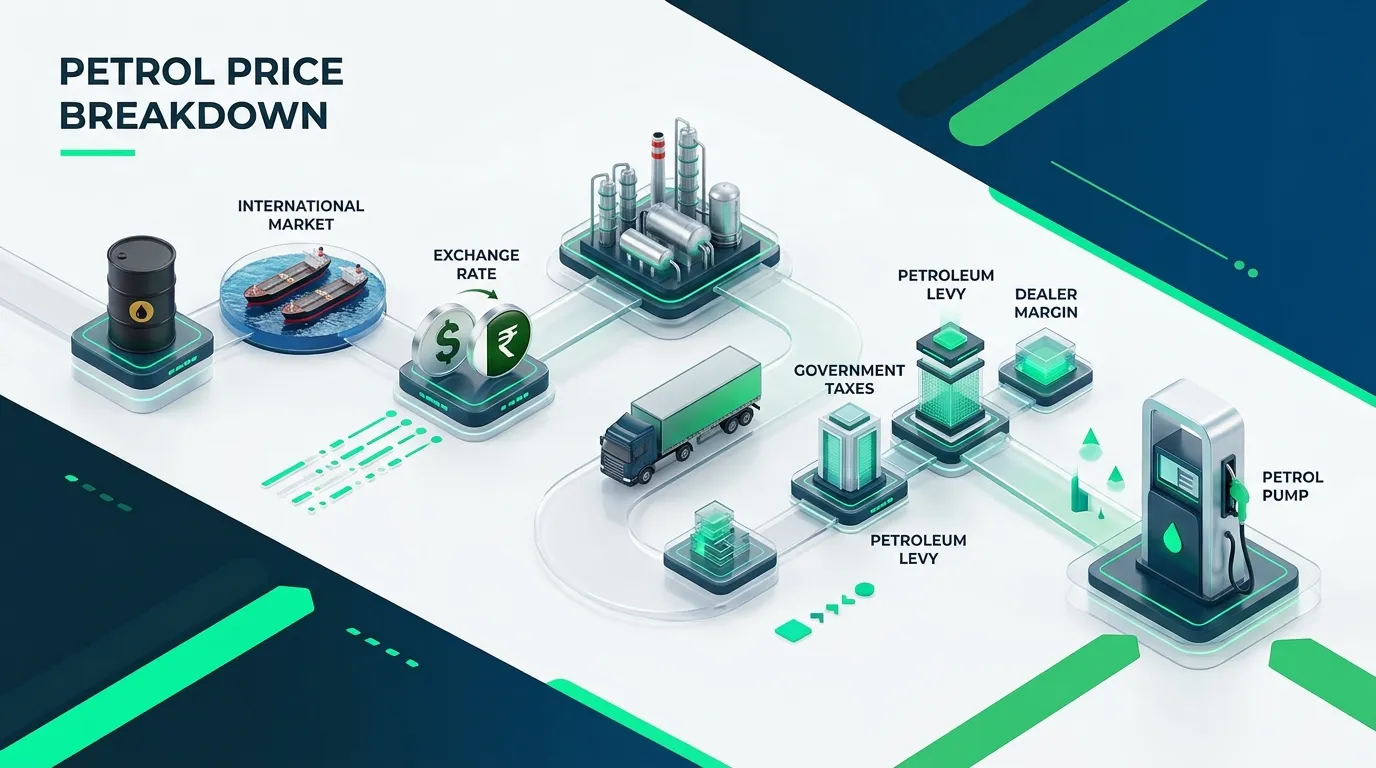
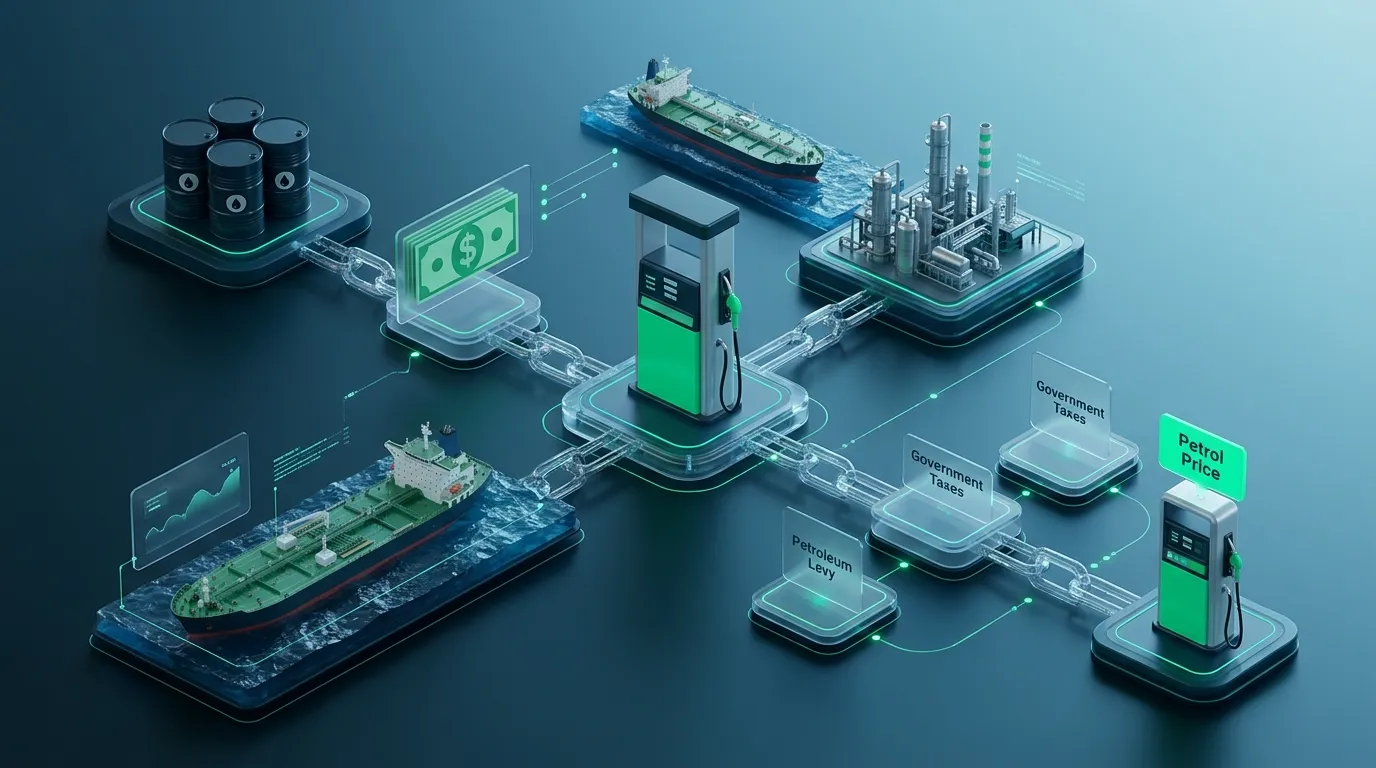
A permanent reduction in the retail price sounds straightforward. However, petrol prices are not determined only by the cost of crude oil. Pakistan’s fuel-price structure includes several components.
These can include:
- International petroleum prices
- Import costs
- Exchange-rate movements
- Freight and transportation costs
- Refining and supply-chain costs
- Inland Freight Equalisation Margin
- Petroleum levy
- Climate support levy
- Customs duties
- Dealer margins
- Oil marketing company margins
Reducing the final price permanently requires funding the difference, which is why petrol relief for consumers in Pakistan may be provided through targeted measures such as a petrol subsidy in Pakistan.
Reason 1: The Government Collects Significant Petroleum Revenue
Petroleum products are an important source of government revenue. Recent government data and reporting show that petroleum levies have generated substantial revenue for Pakistan.
The latest pricing information reported a Rs80 per litre Petroleum Levy on petrol, along with other charges and fixed margins.
A broad reduction in the retail price could therefore mean lower government revenue unless another source of funding replaces it. That could create additional pressure on the national budget.
Reason 2: Pakistan Has to Pay International Import Costs
Pakistan cannot simply decide what imported petrol should cost.
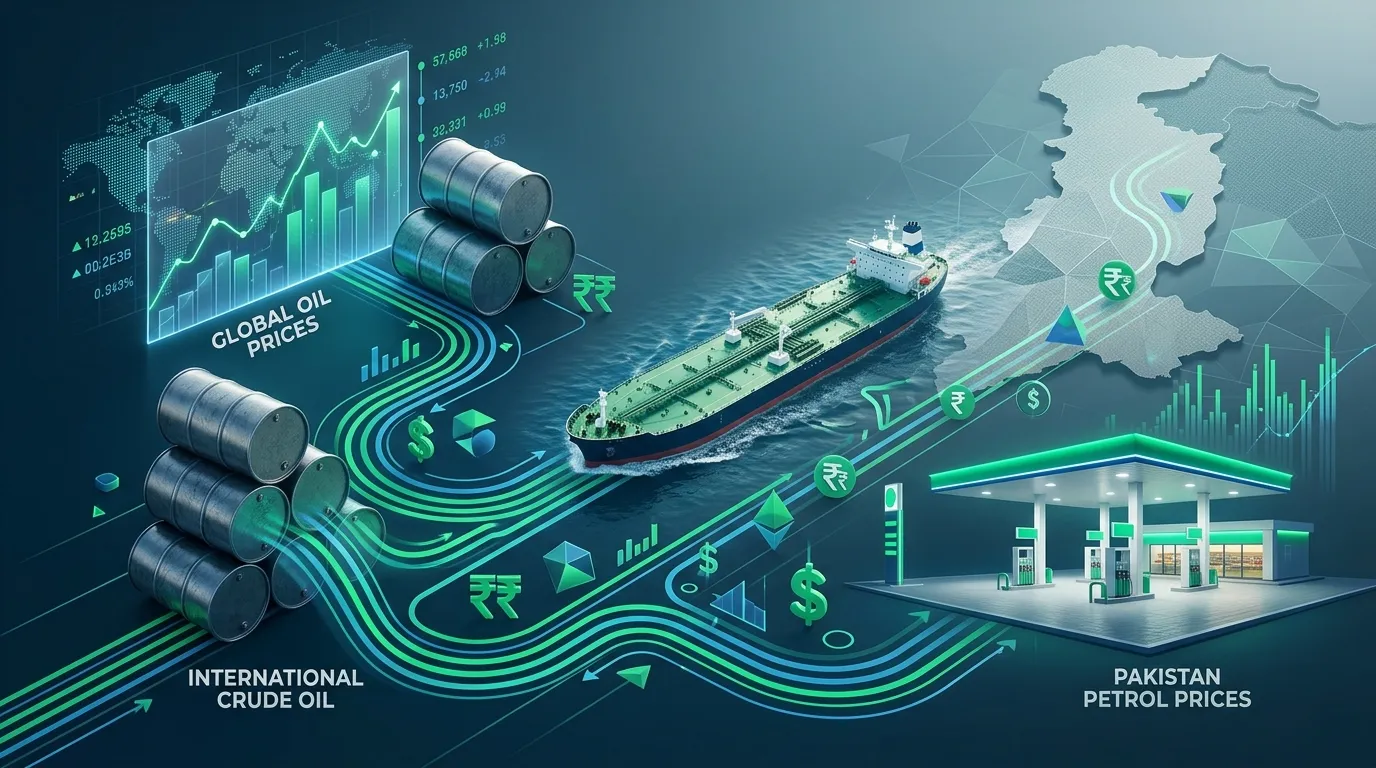
International oil prices influence the cost of importing petroleum products. When global prices rise, Pakistan’s import bill can increase.
The exchange rate also matters. If the Pakistani rupee weakens against the US dollar, imported petroleum can become more expensive even if the international oil price remains relatively stable.
This is why domestic petrol prices can rise even when the situation at local fuel stations has not changed.
Reason 3: A Universal Subsidy Would Cost Much More
There is a major difference between helping selected consumers and reducing petrol prices for everyone.
Suppose the government reduced petrol prices by Rs100 per litre for every consumer. That would provide a much larger benefit to people who consume large quantities of petrol.
A household with a small motorcycle might receive relatively little total benefit. A person using multiple vehicles or consuming hundreds of litres could receive much more.
The targeted scheme attempts to concentrate financial assistance on specific consumer groups instead.
Reason 4: Universal Price Cuts Can Become Expensive
A permanent price reduction needs permanent funding.
If international petroleum prices remain high, the government would have to continue paying the difference between the actual cost and the lower consumer price.
That could create a large fiscal burden.
The government would then have to choose between:
- Increasing borrowing
- Reducing other expenditures
- Increasing other taxes
- Reducing petroleum-related revenue
- Increasing the deficit
- Or eventually removing the subsidy
This is one reason targeted relief can be used as a temporary response rather than permanently changing the retail price.
Petrol Relief vs Petrol Price Reduction
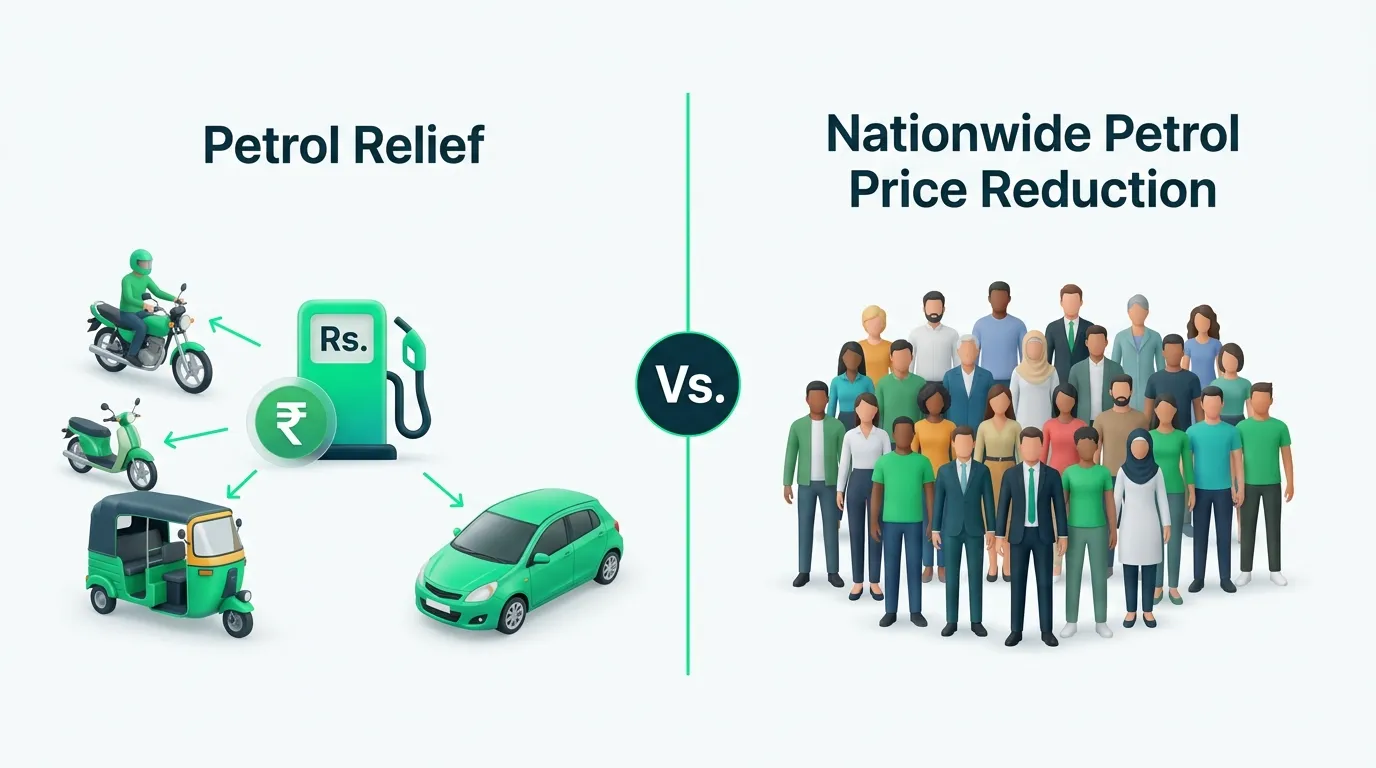
| Feature | Targeted Petrol Relief | General Petrol Price Cut |
|---|---|---|
| Who benefits? | Selected eligible consumers | Everyone |
| Government cost | More targeted | Potentially much larger |
| Monthly limit | Yes | Usually no |
| Focus | Vulnerable or specified users | Entire market |
| Effect on official petrol price | Does not necessarily change it | Directly lowers it |
| Fiscal pressure | Potentially more controlled | Potentially much higher |
| Response to temporary shock | Suitable as short-term support | Can become difficult to sustain |
Why Targeted Relief May Make More Sense During a Temporary Shock?
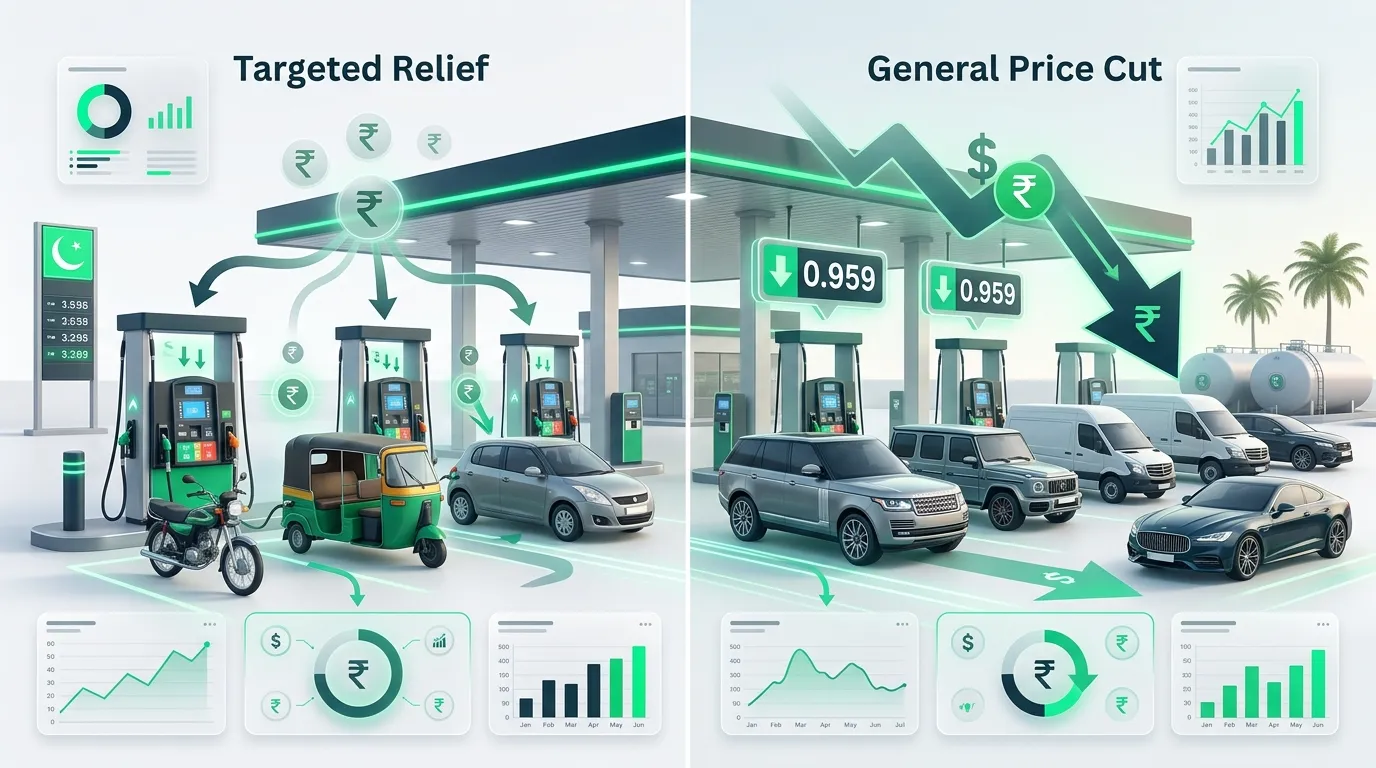
The current situation is partly connected to international oil-market volatility.
Pakistan’s Petroleum Pricing Committee is reviewing reforms to make fuel pricing more transparent and predictable, while exploring measures such as petrol relief for consumers in Pakistan and a targeted petrol subsidy in Pakistan approach to reduce the impact of price volatility.
If international prices eventually fall, the government can allow domestic prices to decline through the normal pricing mechanism.
If the government permanently lowers the price through a large subsidy, it could remain responsible for financing that subsidy even after the original shock changes. A targeted scheme can be easier to adjust or discontinue.
But Why Do Consumers Still Feel Petrol Is Too Expensive?
This is an important point.
Even when the government provides relief, the underlying petrol price can remain high. For consumers who are not eligible, the relief may have little or no direct effect.
Even eligible consumers have monthly limits.
For example, the official scheme provides relief for up to 20 litres per month for motorcycles and three-wheelers and up to 30 litres per month for eligible cars.
Someone who consumes substantially more than the eligible quantity will still pay the regular market price for additional fuel. This means targeted relief should be viewed as financial assistance, not as a complete solution to high fuel prices.
What Happens If Petrol Prices Remain High?
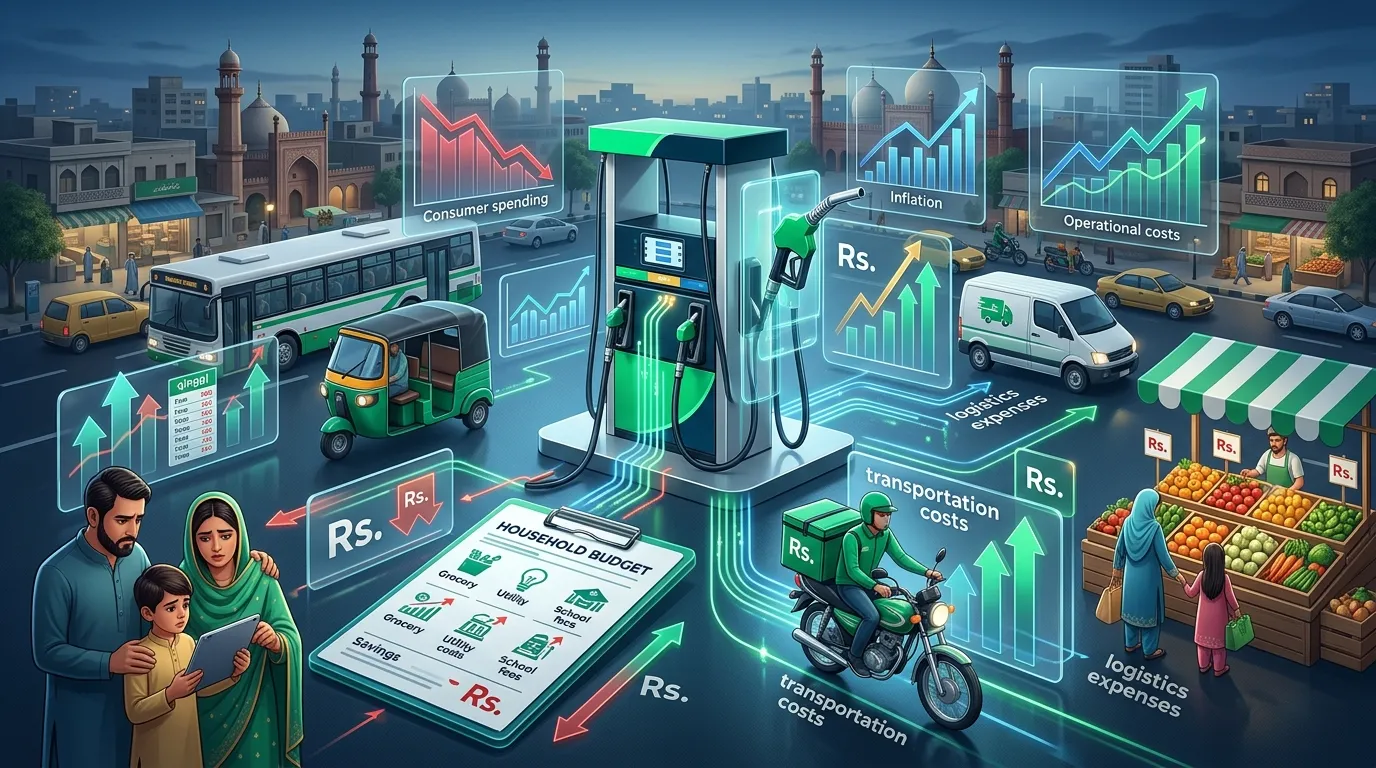
High petrol prices affect more than motorists, increasing costs across the economy. Petrol relief for consumers in Pakistan, including targeted measures such as a petrol subsidy in Pakistan, can help reduce this financial pressure.
1. Transportation
Higher fuel costs can increase the operating expenses of private and commercial transport.
2. Food
- Transport is part of the supply chain for agricultural products, groceries and other goods.
- Higher transportation costs can eventually put pressure on prices.
3. Businesses
Companies that use vehicles for deliveries, sales teams, logistics or field operations may face higher expenses.
4. Household Budgets
Families may have less disposable income after paying for commuting and transportation.
5. Inflation
Fuel-price increases can contribute to broader inflationary pressure because transportation is connected to many sectors of the economy.
Diesel is particularly important here, beacuse HSD is widely used in heavy transport, generators and other commercial activities. Therefore, diesel prices can have a significant indirect effect on the wider economy.
Could the Government Reduce Petrol Prices by Cutting Taxes?
Technically, reducing petroleum-related taxes and levies could reduce the final consumer price.
However, there is a trade-off. If the government reduces petroleum levy revenue, it must either accept lower revenue or find another source of funding.
That is why discussions about petrol prices often involve both consumer affordability and government finances.
The question is not simply:
“Can petrol be cheaper?”
It is also:
“Who will pay for the difference?”
- If the international cost is high and taxes are reduced, the government absorbs more of the burden.
- If taxes remain high, consumers pay more.
- If the government subsidises fuel, taxpayers ultimately carry the fiscal cost through the national budget.
What Would Actually Help Consumers in the Long Term?
Short-term relief can help households manage sudden price shocks. However, long-term fuel affordability requires broader changes.
1. More Competitive Fuel Markets
Pakistan’s Petroleum Pricing Committee has been examining reforms intended to encourage greater competition in the fuel supply chain.
Greater competition could potentially improve efficiency and pricing transparency.
2. Better Energy Security
Reducing dependence on imported petroleum could make Pakistan less vulnerable to international oil shocks.
3. Stronger Public Transport
Affordable and reliable public transportation can reduce household dependence on private vehicles.
4. Fuel-Efficient Vehicles
Smaller and more efficient vehicles consume less petrol, reducing the effect of high fuel prices on individual households.
5. Alternative Energy
Electric vehicles, hybrid vehicles and other alternatives could gradually reduce dependence on petroleum.
However, effective petrol relief for consumers in Pakistan and any petrol subsidy in Pakistan require infrastructure, investment, and a reliable energy sup
What Should Consumers Watch Next?
Consumers should watch several factors when trying to understand the current petrol price in Pakistan.
International Oil Prices
Global crude and refined-product prices remain one of the most important factors.
Pakistani Rupee
Exchange-rate movements can affect the local cost of imported fuel.
Government Levies
Changes in petroleum levy, customs duties or other charges can affect the final price.
Import Costs
Pakistan’s dependence on imported petroleum makes international supply conditions particularly important.
Government Pricing Formula
Changes to the pricing mechanism can affect how quickly global movements reach Pakistani consumers.
Fuel Relief Policies
Consumers should also monitor eligibility requirements, registration rules, fuel tokens and monthly limits.
The Bigger Picture for Pakistani Consumers
The current petrol subsidy in Pakistan provides immediate assistance to selected consumers, but it does not eliminate the underlying reasons for high fuel prices.
For an eligible motorcycle user, Rs100 per litre can make a meaningful difference within the monthly limit.
For a small-car owner, the maximum monthly relief can also reduce transportation expenses.
But consumers should not confuse this support with a permanent reduction in the country’s petrol price. The official retail price still reflects international petroleum costs, import expenses, taxes, levies and other components of the pricing structure.
A nationwide permanent reduction would provide broader relief, but it would also create a substantially larger fiscal cost for the government.
That is the central trade-off.
Final Takeaway
Pakistan’s current fuel relief approach is focused on targeted support rather than a blanket reduction in petrol prices.
The benefit is that assistance can be directed toward consumers who meet specific eligibility criteria while limiting the government’s financial exposure.
The limitation is equally clear: consumers outside the scheme do not receive the same direct benefit, and eligible consumers face monthly fuel limits.
The bigger challenge is making fuel prices more predictable and reducing Pakistan’s exposure to global oil-price shocks. For consumers, tracking the official petrol price alongside petrol relief for consumers in Pakistan and any petrol subsidy in Pakistan programs can help them understand available support.
At TodayPetrolPrice.com, we continue to monitor fuel-price changes and provide updates on petrol, diesel and other petroleum products so consumers can understand what they are paying and why prices change.
Check the latest current petrol price in Pakistan and stay updated with the latest fuel news and government announcements.
Related Reading
- Current Petrol Price in Pakistan
- Diesel Price in Pakistan
- Fuel Price Calculator
- Latest Fuel News
- About TodayPetrolPrice.com
Stay updated with TodayPetrolPrice.com for the latest petrol price in Pakistan, diesel prices, fuel news and government fuel-price updates.