Pakistan Fuel Security: How US Crude Imports Are Reshaping Pakistan’s Energy Strategy
Pakistan’s Fuel Strategy Is Entering a New Phase
Pakistan is changing the way it thinks about energy security. For years, Gulf suppliers have played a central role in meeting the country’s crude oil needs. That dependence has become more visible during the latest disruption around the Strait of Hormuz.
Pakistan is now looking toward American crude as another source of supply. The move is led by Cnergyico, the country’s largest oil refiner. The company is increasing its purchases from the United States after disruptions exposed the risks of relying heavily on Gulf shipping routes.
This development is important for Pakistan fuel security. It does not mean that Pakistan is abandoning Gulf suppliers. Instead, it represents an attempt to diversify crude sources. Consumers can also monitor the latest petrol price in Pakistan to understand how international oil market changes may affect local fuel costs.
The idea is simple. Pakistan needs more than one reliable route for importing energy.
Recent events have shown why that matters. The Strait of Hormuz is a critical maritime chokepoint. Any prolonged disruption can affect crude availability, freight costs, insurance premiums, and refinery operations.
For Pakistani consumers, the issue goes beyond crude oil imports. It can eventually affect petrol availability, diesel supplies, transportation costs, inflation, and the wider economy.
Tracking the today petrol price can help consumers stay informed about changes in domestic fuel rates as global energy conditions evolve.
What Is Happening With U.S. Crude Imports Pakistan?
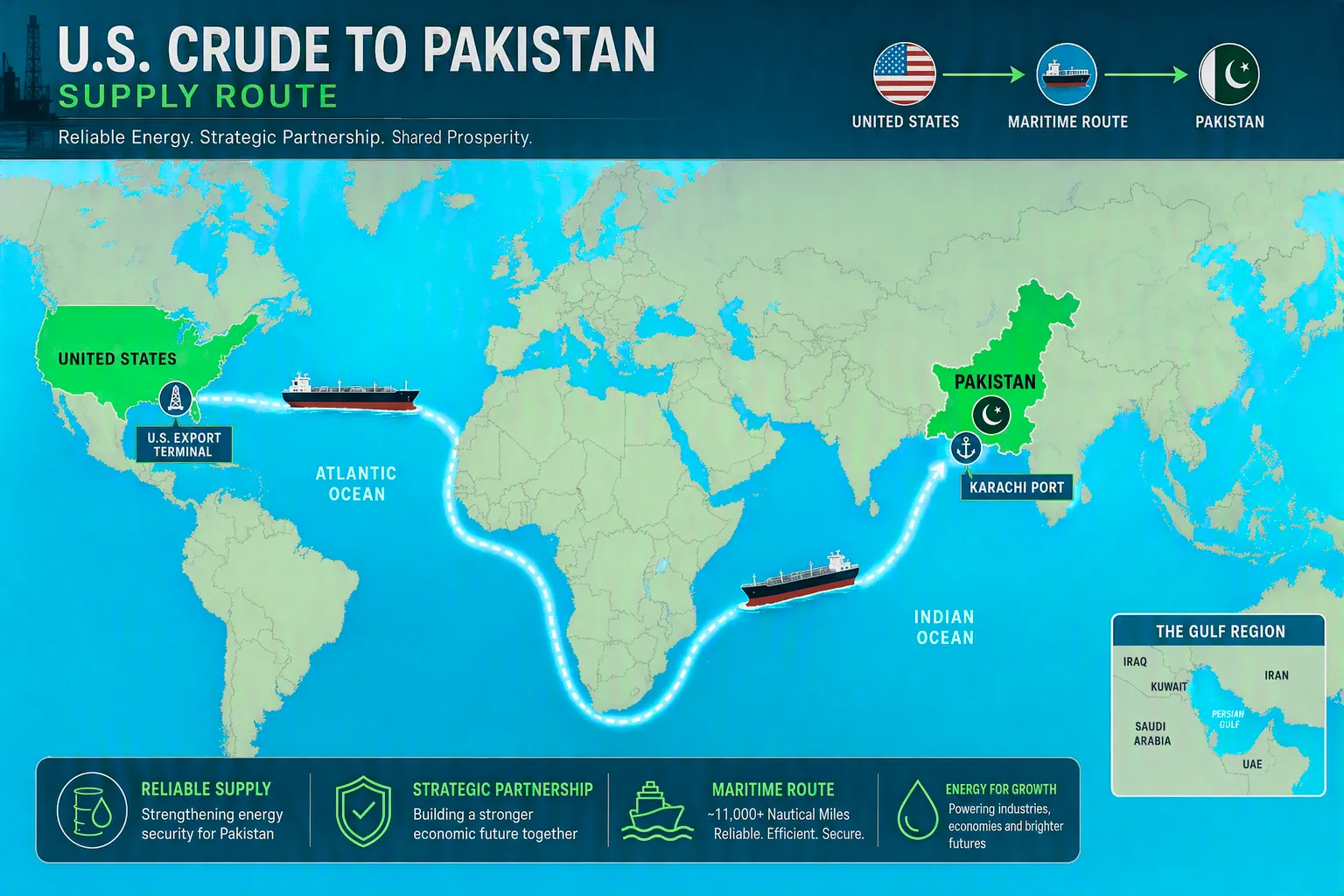
Cnergyico has already established a meaningful relationship with American crude suppliers. Reuters reported that the refiner imported around 8.1 million barrels of U.S. crude over nine months.
Of that amount, approximately 7.1 million barrels worth about $750 million were imported during the fiscal year ending June 2026.
The company is now considering additional purchases. It may use spot purchases alongside longer-term supply arrangements.
This is significant because procurement decisions can increasingly depend on three factors:
- Price
- Reliability
- Supply security
Cnergyico has also indicated that larger shipments could improve economics. The company is considering additional offshore infrastructure as part of a broader investment plan.
The development shows how US crude imports Pakistan could become a larger part of the country’s energy mix.
Recent U.S. crude import indicators
| Indicator | Reported figure |
|---|---|
| U.S. crude imported by Cnergyico over nine months | About 8.1 million barrels |
| U.S. crude imported in FY2025-26 | About 7.1 million barrels |
| Value of FY2025-26 U.S. crude | About $750 million |
| Pakistan’s increase in U.S. import payments | $914 million |
| Pakistan’s total U.S. import payments in FY2025-26 | $3.27 billion |
| Potential U.S. crude target reported for current fiscal year | At least 12 million barrels |
The figures demonstrate why Pakistan fuel security has become closely connected with international sourcing decisions.
Why Gulf Supply Risks Matter for Pakistan?
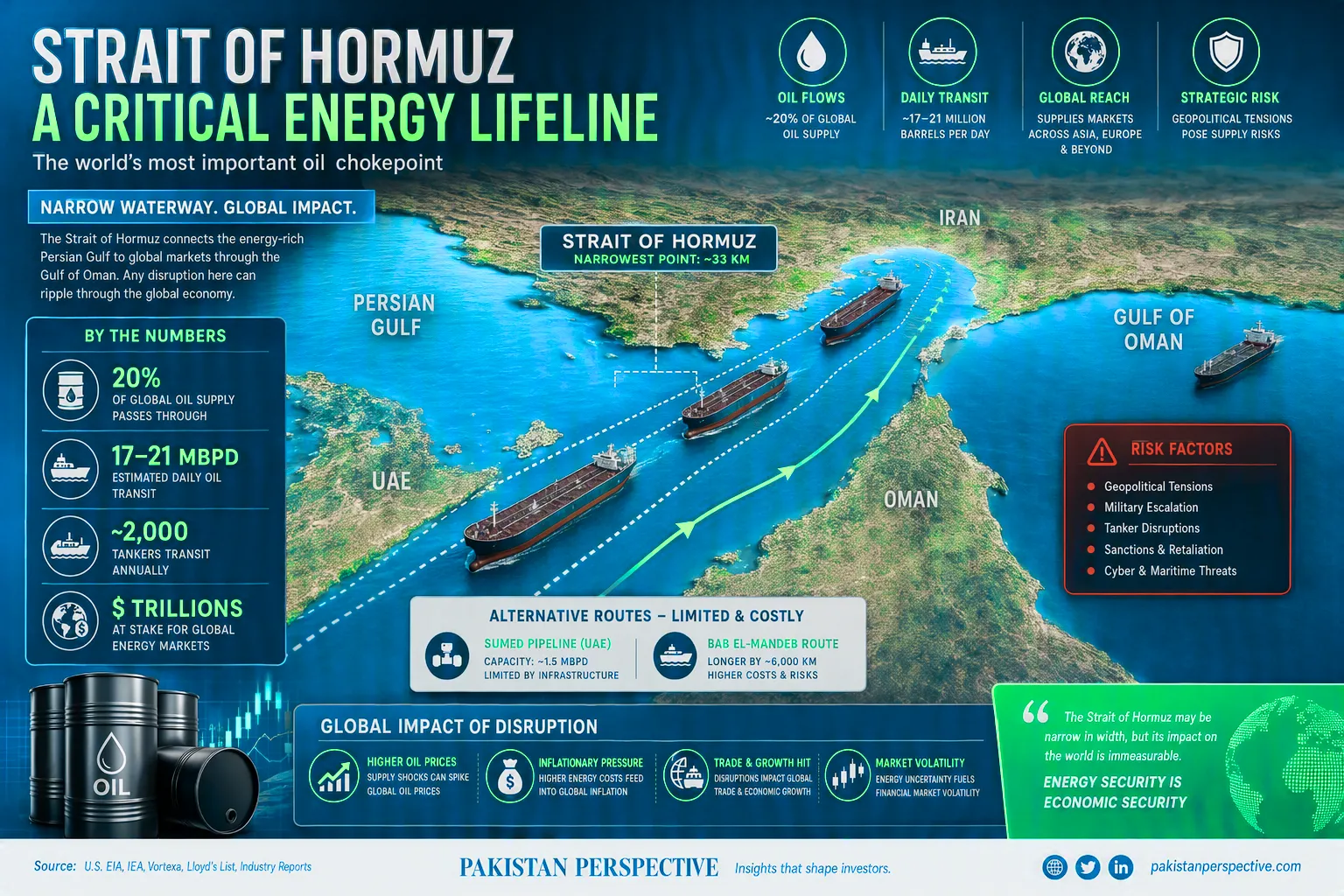
Pakistan’s geography creates a major energy challenge. The country imports a substantial share of its petroleum requirements. Much of the imported energy has traditionally arrived through routes connected to the Gulf.
The Strait of Hormuz is therefore extremely important.
When shipping through the region becomes difficult, the consequences can extend beyond delayed cargoes. Tanker insurance may become more expensive. Freight rates can rise. Vessels may need to use alternative routes.
These additional costs eventually influence the landed cost of crude.
That makes Pakistan fuel security a supply-chain issue rather than simply an oil-price issue.
Pakistan’s government has already emphasized the importance of diversification. Earlier in 2026, the Finance Division discussed alternative supplies, import planning, petroleum stocks, and measures to maintain uninterrupted fuel availability.
The government has also discussed developing a framework for strategic petroleum reserves.
These measures could become increasingly important if geopolitical risks remain elevated.
How the Strait of Hormuz Affects Pakistan?
The Strait of Hormuz connects the Persian Gulf with the Gulf of Oman.
It is one of the world’s most important energy chokepoints. Large volumes of crude oil and petroleum products normally pass through the waterway.
When the route faces disruption, Asian importers can experience several simultaneous pressures.
The supply chain can be affected in five stages
Stage 1 — Shipping risk increases
Tanker operators face higher security concerns.
Stage 2 — Freight and insurance costs rise
Carriers may charge more for risky routes.
Stage 3 — Cargo schedules become uncertain
Refiners may receive shipments later than planned.
Stage 4 — Alternative crude becomes more attractive
Buyers begin looking outside traditional supply regions.
Stage 5 — Domestic fuel markets face pressure
Higher landed costs can eventually influence petroleum prices.
This explains why US crude imports Pakistan are receiving greater attention. The strategy creates another potential supply option outside the Gulf.
Why Pakistan Is Looking Toward the United States?
The United States has become an important producer and exporter of crude oil. For Pakistan, American barrels offer geographic diversification. The United States is obviously much farther from Pakistan than Gulf suppliers. That creates a transportation disadvantage under normal market conditions.
However, diversification has value when traditional routes face serious disruption. A cargo that is slightly more expensive under normal circumstances can become attractive when an alternative route becomes risky.
This is one reason US crude imports Pakistan could increase even when Gulf crude remains commercially important. The objective is not necessarily to replace Saudi Arabian or UAE supplies. The objective is to create additional options.
US Crude Imports Pakistan: What Could Change?
There are several possible effects if American crude becomes a larger part of Pakistan’s supply portfolio.
1. Greater supply diversification
The most obvious benefit is diversification. A country that depends heavily on one geographic region faces greater exposure to regional disruptions.
Adding American crude provides another source. That can strengthen Pakistan fuel security over time.
2. More negotiating power
Multiple suppliers can give refiners greater purchasing flexibility. If suppliers compete for Pakistani demand, refiners may have more opportunities to negotiate commercial terms.
This does not guarantee cheaper fuel. However, it can improve procurement flexibility.
3. Greater shipping flexibility
American crude generally travels through longer maritime routes. That creates higher freight exposure. Yet alternative routes can become strategically valuable when Gulf shipping faces disruption.
4. New infrastructure requirements
More U.S. crude imports may require better port infrastructure. Large crude carriers need suitable offshore facilities and storage capacity.
Cnergyico has been considering additional offshore mooring infrastructure as part of its investment plans. Reuters reported that its broader upgrade plan is valued at approximately $1.2 billion.
5. Stronger commercial links with the United States
Energy trade can also have wider economic implications.
Pakistan wants to increase imports from the United States. The government has linked stronger bilateral trade with broader economic objectives.
Therefore, US crude imports Pakistan may have both energy and trade-policy implications.
U.S. Crude vs Gulf Crude for Pakistan
| Factor | U.S. Crude | Gulf Crude |
|---|---|---|
| Geographic distance | Longer | Much shorter |
| Traditional role | Growing | Established |
| Shipping exposure | Long-distance routes | Gulf-focused routes |
| Diversification value | High | Lower for Pakistan’s existing portfolio |
| Supply flexibility | Potentially high | Strong established relationships |
| Freight sensitivity | Potentially higher | Generally lower under normal conditions |
| Strategic value | Reduces geographic concentration | Remains essential |
| Refinery compatibility | Depends on crude grade | Established grades and suppliers |
| Long-term importance | Increasing | Still very high |
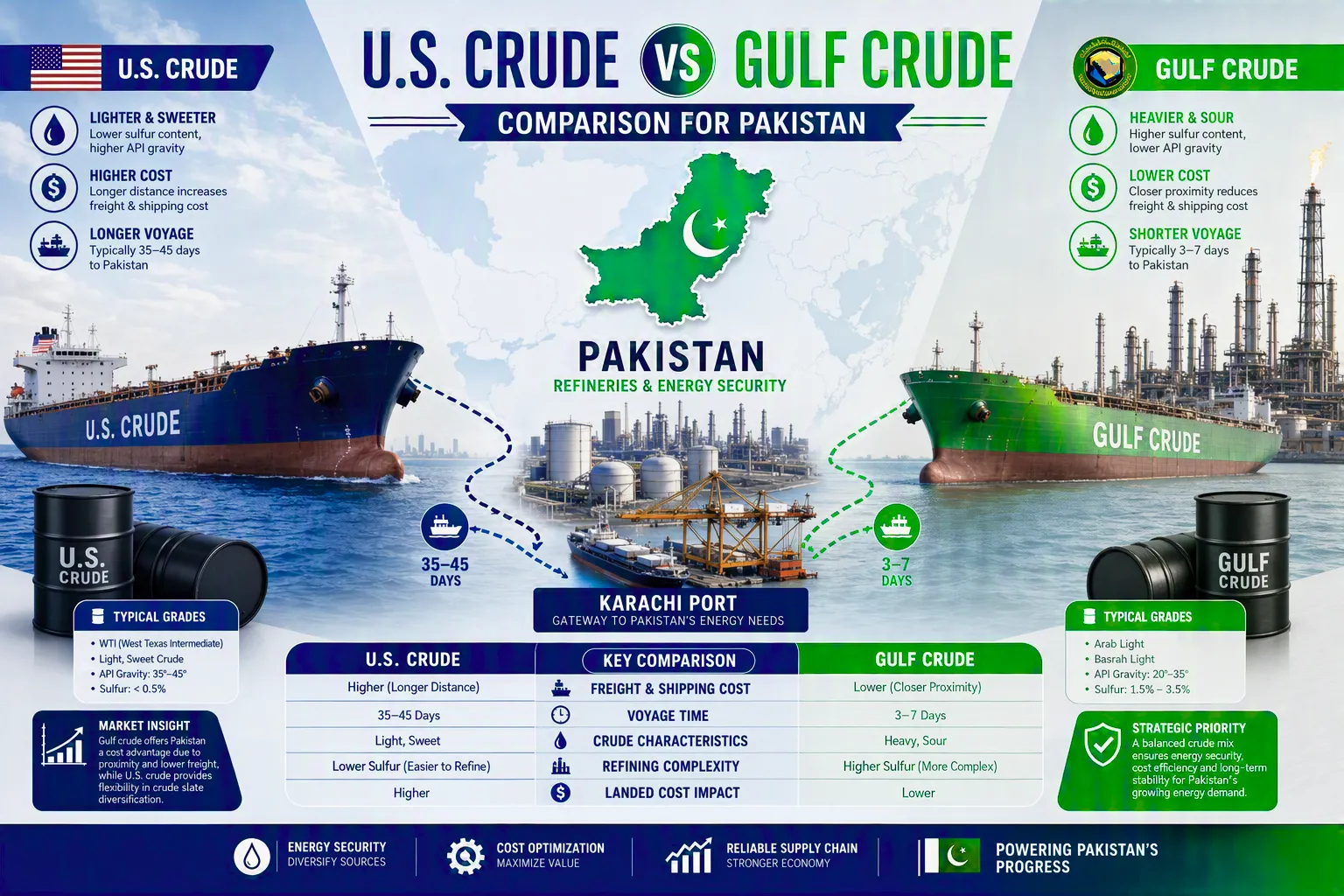
The comparison shows why Pakistan is unlikely to completely abandon Gulf suppliers. Instead, the future of Pakistan fuel security will likely involve a broader supplier mix. Expanding US crude imports could help Pakistan diversify its energy sources. This approach can reduce risks from regional supply disruptions.
How U.S. Crude Could Affect Petrol and Diesel Prices?
Consumers may naturally ask one question:
Will American crude make petrol cheaper in Pakistan?
The answer is not necessarily. Crude price is only one part of the final fuel price.
Other factors include:
- International refined-product prices
- Freight costs
- Marine insurance
- Exchange rates
- Import premiums
- Refinery margins
- Taxes and levies
- Distribution costs
- Domestic regulatory decisions
Therefore, increased US crude imports Pakistan should not automatically be interpreted as a promise of lower petrol prices. The more immediate benefit may be supply resilience.
If alternative crude prevents a major supply shortage, it can reduce the risk of severe market disruption. That is a different benefit from simply lowering the pump price.
A Simple Fuel Security Chain
The relationship can be understood through this process:
Global conflict → Gulf shipping risk → Higher freight and insurance uncertainty → Alternative crude sourcing → U.S. crude imports Pakistan → More diversified supply → Stronger Pakistan fuel security → Lower exposure to one supply corridor
This does not eliminate risk. It spreads risk across different suppliers and routes.
Pakistan Fuel Security: The Bigger Strategic Picture
The current situation highlights a larger issue. Pakistan fuel security cannot depend only on buying crude at competitive prices.
The country also needs resilient infrastructure.
That includes:
- Adequate crude storage
- Refined-product storage
- Multiple suppliers
- Reliable ports
- Offshore mooring facilities
- Strong refinery capacity
- Efficient tanker logistics
- Strategic petroleum reserves
- Foreign-exchange planning
- Transparent market monitoring
The government has already been monitoring fuel stocks and supply arrangements closely during periods of international volatility. Official statements in 2026 emphasized supply continuity, stock monitoring, additional cargoes, and diversification of sources.
The State Bank of Pakistan has introduced measures supporting crude, petroleum, and LNG imports. These policies strengthen Pakistan fuel security, while US crude imports could diversify supply and reduce regional risks.
What About Strategic Petroleum Reserves?
Strategic reserves could become one of the most important parts of Pakistan’s future energy policy. Commercial inventories are designed to support normal business operations.
Strategic reserves serve another purpose. They provide an emergency buffer. If imports are delayed, reserves can temporarily support domestic consumption.
Pakistan’s Finance Division has discussed initiating work on a strategic petroleum reserves framework. Such reserves could improve Pakistan fuel security during future supply shocks.
However, strategic reserves are expensive.
The country would need:
- Large storage facilities
- Appropriate locations
- Financing mechanisms
- Rotation policies
- Quality monitoring
- Clear release rules
- Emergency distribution plans
A reserve is useful only when it is properly managed.
Why Refinery Capacity Matters?
Crude oil does not directly power most cars. It must first be processed by refineries, making refinery capacity crucial for Pakistan fuel security. As the country explores new suppliers, US crude imports could also help diversify its fuel supply.
Different crude grades have different characteristics. A refinery must be able to process a particular crude efficiently.
That means Pakistan cannot simply buy any available barrel.
Refiners must evaluate:
- Crude quality
- Sulfur content
- Yield profile
- Refinery configuration
- Freight cost
- Insurance
- Refining margins
- Product demand
This is why Cnergyico’s experience with American crude is important. Repeated purchases can help refiners understand how different U.S. grades perform in their facilities.
Infrastructure Could Decide the Success of U.S. Crude
Long-distance crude imports require efficient maritime infrastructure. Cnergyico’s planned infrastructure investment is therefore important.
Reuters reported that the company is considering a second offshore mooring. Such infrastructure could improve tanker handling and reduce operational bottlenecks.
Larger tankers can also change the economics of long-distance crude imports. If more crude can be carried per voyage, transportation costs can potentially be spread across a larger cargo. This could make US crude imports more competitive for Pakistan, especially when evaluating longer-distance supply routes.
This is particularly important for US crude imports Pakistan, because American supply requires longer shipping distances.
Benefits of Diversifying Pakistan’s Oil Supply
Reduced geographic dependence
Pakistan can reduce its dependence on a single region.
Better crisis preparedness
Alternative suppliers provide additional options during emergencies.
Potential procurement flexibility
Refiners can compare different crude grades and commercial offers.
Stronger energy diplomacy
Energy imports can strengthen broader economic relationships.
Improved long-term resilience
Diversification can reduce the impact of individual supply disruptions.
Better infrastructure investment
Growing imports can encourage investment in ports, storage, and offshore facilities.
These benefits strengthen the broader objective of Pakistan fuel security.
Risks and Challenges
Diversification is not free from challenges.
Higher transportation costs
The United States is far from Pakistan.
Longer voyages can increase freight costs.
Crude compatibility
Not every crude grade works equally well with every refinery.
Global competition
Pakistan competes with other Asian buyers for internationally traded barrels.
Foreign-exchange pressure
Large crude purchases require substantial foreign currency.
Price volatility
American crude prices can also rise during global supply shocks.
Infrastructure limitations
Ports and storage facilities must support larger and longer-distance shipments. Therefore, US crude imports Pakistan should be viewed as one component of a broader strategy.
What It Means for Pakistani Consumers?
For ordinary consumers, the immediate question remains fuel availability.
- Will petrol stations have enough supply?
- Will diesel remain available?
- Will transportation costs increase?
These questions depend on the entire petroleum supply chain. A diversified import strategy can help reduce the probability of a major supply disruption. However, international crude prices remain important.
However, international crude prices remain important. If global oil prices rise sharply, Pakistan can still face higher import costs. That means Pakistan fuel security and petrol-price stability are related, but they are not identical. Greater diversification through US crude imports can reduce supply risks and improve Pakistan’s energy resilience. However, it cannot completely protect consumers from global oil-price increases.
Consumers should therefore watch both domestic petroleum announcements and international oil-market developments. For daily petrol and diesel updates, readers can continue checking Today Petrol Price for Pakistan-focused fuel information.
For daily petrol and diesel updates, readers can continue checking Today Petrol Price for Pakistan-focused fuel information.
How This Could Reshape Pakistan’s Energy Policy?
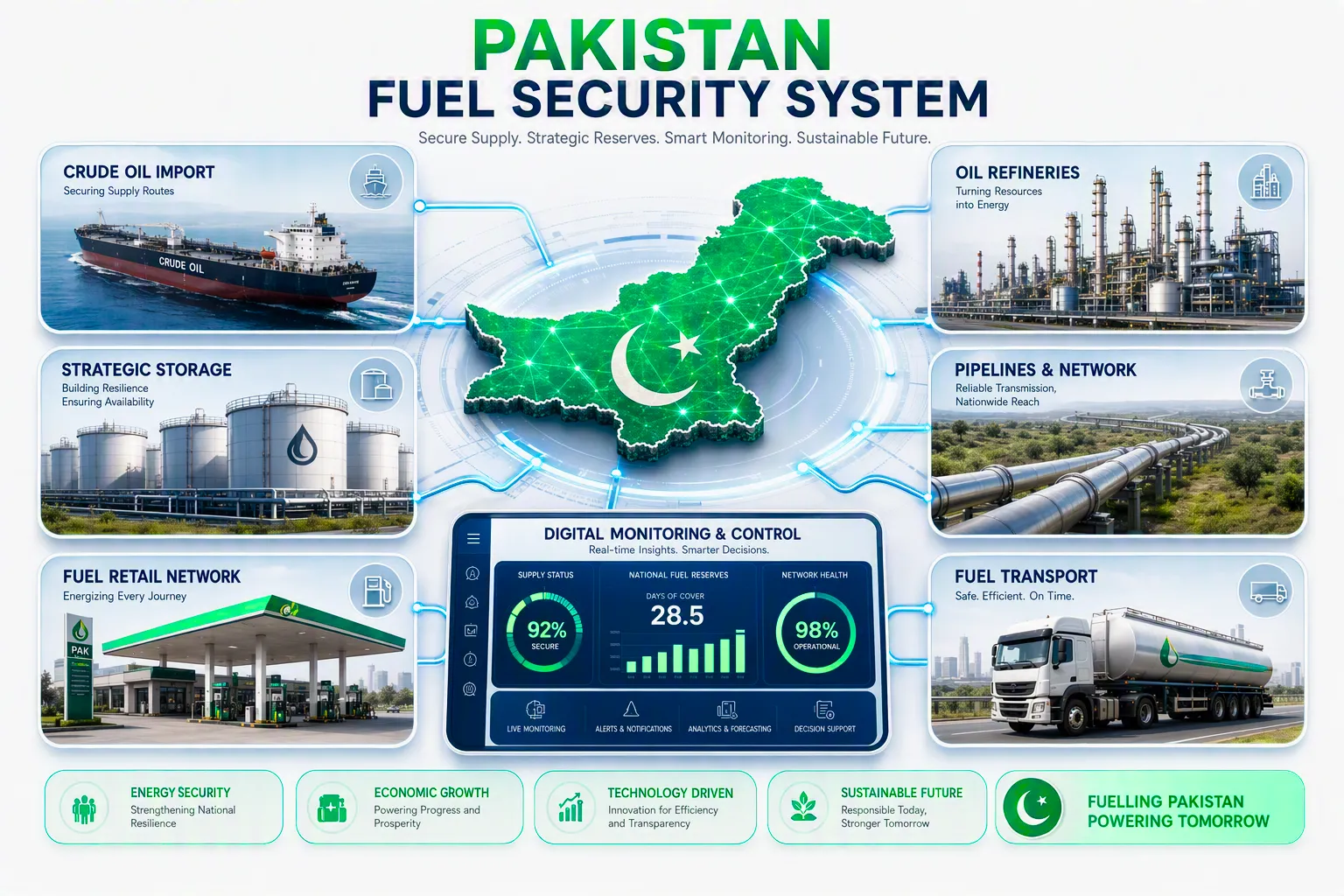
The current shift could encourage Pakistan to rethink its traditional energy strategy. The country may increasingly focus on four priorities.
1. Supply diversification
More countries could become part of Pakistan’s crude sourcing portfolio.
2. Strategic storage
Emergency reserves could become more important.
3. Infrastructure modernization
Ports, storage terminals, pipelines, and offshore moorings may receive greater attention.
4. Demand management
Fuel conservation can reduce pressure during international supply shocks. These four elements together can create a stronger Pakistan fuel security framework.
What Should Pakistan Do Next?
Pakistan could consider a balanced strategy instead of replacing one supplier with another.
The strongest approach would involve multiple sources.
Potential measures include:
- Maintain reliable Gulf relationships.
- Expand U.S. crude procurement when commercially viable.
- Explore crude from additional regions.
- Increase strategic petroleum storage.
- Improve offshore tanker infrastructure.
- Strengthen refinery efficiency.
- Improve real-time fuel-stock monitoring.
- Maintain emergency supply plans.
- Reduce unnecessary fuel consumption.
- Improve transparency around petroleum supply data.
The goal should be resilience.
Pakistan does not need to predict every future crisis. It needs to become better prepared for them.
The Role of Digital Information in Fuel Security
Fuel security also depends on accurate information. During a supply crisis, rumors can spread quickly. Consumers may rush to petrol stations. That can create artificial shortages.
Reliable digital information can help consumers understand actual market conditions. Websites, government agencies, regulators, oil companies, and media organizations all have a role.
For businesses that need stronger digital visibility, website performance, SEO, and content systems can also become important.
A well-structured website can help energy businesses publish accurate updates quickly. It can also improve access to important information during periods of uncertainty.
For digital marketing, SEO, website development, and online visibility services, you can explore 27 DIGI.
How Consumers Can Prepare for Fuel Market Volatility?
Consumers cannot control international crude prices. They can control their fuel consumption. Simple measures can reduce exposure to fuel-price volatility.
Useful fuel-saving habits
- Keep tires properly inflated.
- Avoid unnecessary idling.
- Maintain the engine regularly.
- Use the correct engine oil.
- Avoid aggressive acceleration.
- Plan routes efficiently.
- Combine multiple trips.
- Remove unnecessary weight.
- Maintain proper wheel alignment.
- Compare fuel consumption regularly.
These practices can reduce household transportation costs. They also reduce national fuel demand. That makes energy conservation another part of Pakistan fuel security.
Key Takeaways
The move toward American crude reflects a stronger focus on Pakistan fuel security. Gulf suppliers remain vital, but recent disruptions show the risks of geographic dependence. US crude imports could help Pakistan diversify supplies and reduce future supply risks.
Cnergyico’s growing U.S. purchases provide an example of how Pakistani refiners can diversify their crude sourcing. The reported 8.1 million barrels imported over nine months shows that this is already more than a theoretical strategy.
The potential increase toward at least 12 million barrels would make the trend even more significant. For Pakistan, the broader objective should remain clear.
The country needs reliable supply.
- It needs flexible logistics.
- It needs adequate storage.
- It needs competitive procurement.
Most importantly, it needs resilience. That is the foundation of long-term Pakistan fuel security.